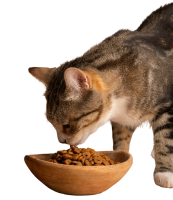
The choice of croquettes is one of the most important decisions you can make for the health and well-being of your pet. Although the market offers an infinite number of options, understanding the benefits and learning to read the label will help you make the best choice.
The Indisputable Advantages of Dry Croquettes Dry kibble is the most popular choice among dog and cat owners, and not for nothing. Their benefits are numerous and proven:
- Practicality and storage: They are easy to store, require no refrigeration and have a long shelf life, making them ideal even for those who travel or have a hectic lifestyle.
- Weight management: Thanks to their energy density and easy dosage, kibbles help to control portions, preventing the risk of obesityan increasingly widespread problem.
- Dental health: The crunchy texture acts as a kind of mechanical 'brush', helping to reduce the formation of plaque and tartaressential for proper oral hygiene.
- Cost-effectiveness: In general, quality kibble offers excellent value for money compared to wet food or other diets.
- Complete nutrition: High-quality formulas are created by nutritionists to provide a food complete and balancedwith all the essential nutrients (proteins, fats, carbohydrates, vitamins and minerals) your animal needs.
Learn to Read the Label: What to Look for and Why To make the right choice, it is essential to read labels carefully. Here are the ingredients and nutritional values to pay attention to:
- Source of High Quality Protein: Look for specific proteins, such as 'pork' or 'dehydrated chicken', rather than 'meat and derivatives'. The croquettes single-protein are an excellent solution for animals with sensitivities or allergies, as they contain only one source of animal protein. Pork, for example, is an excellent option: it is highly digestible, rich in quality protein, B vitamins, iron and zinc, and is particularly appreciated by even the most discerning palates.
- Healthy and Balanced Carbohydrates: Carbohydrates are a source of energy, but the percentage should not be excessive. A value between 25% and the 30% is considered a good balance for most animals.
- Healthy Fats: Fats provide energy and are crucial for healthy skin and coat. Look for specific oils and fats such as 'salmon oil' or 'chicken fat', which provide a source of essential fatty acids, rather than generic and unclear wording.
- Vitamins, Minerals and Additives: The label must specify the presence of vitamins (A, B, E), minerals (iron, zinc) and essential fatty acids such as the Omega-3 and Omega-6essential for general health and joint function.
- Analysis Guaranteed: These percentages tell you the basic nutritional composition:
- Crude protein: A percentage of not less than 22% is a good indicator of quality.
- Crude fats: They should be well balanced according to your animal's lifestyle.
- Crude fibre: Essentials for digestion, a value between the 2% and 3% is ideal.
- Raw ash: They indicate the amount of minerals. A value higher than 10% could indicate lower quality ingredients.
The Personalised Choice: Factors to Consider There is no 'perfect' kibble for everyone. The choice must be customised based on:
- Age: Puppies, adults and seniors have very different nutritional needs.
- Size and breed: The kibbles are specifically formulated for the needs of small, medium and large dogs and cats, with suitable shapes and nutrients.
- Lifestyle: An active animal will need more calories than a sedentary one.
- Health conditions: In case of allergies, digestive problems or other conditions, always consult your vet for a specific diet.